Mika Ahokas as a Guest on the Menestystä Etsimässä Podcast
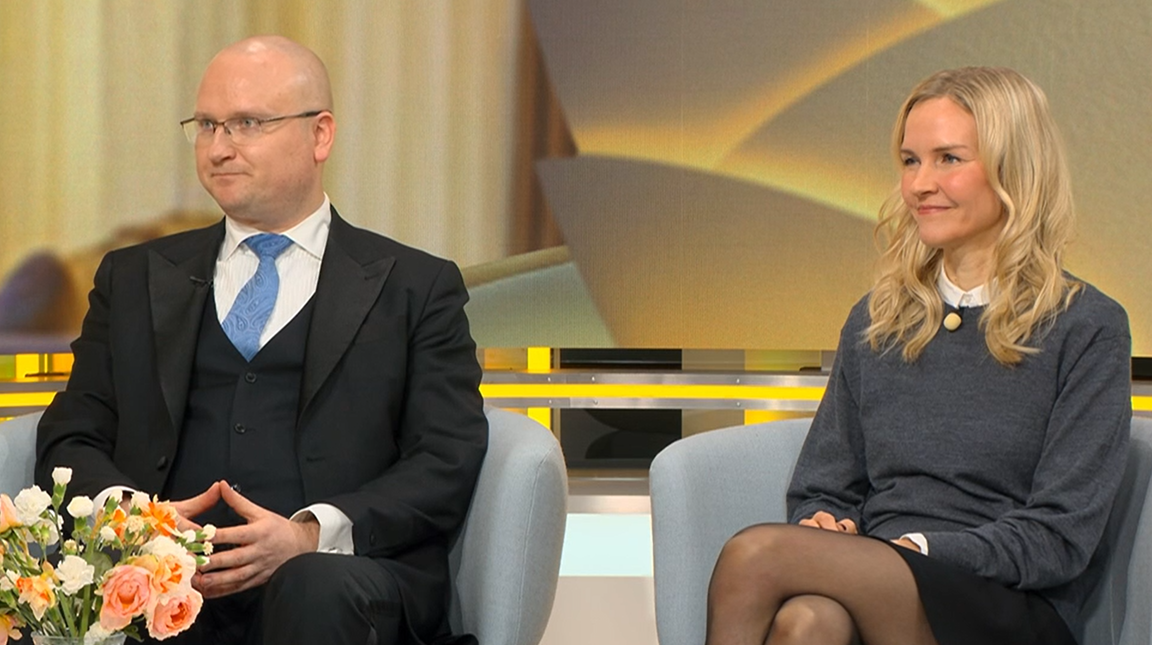
The CEO of One Communications Mika Ahokas appeared as a guest on Menestystä Etsimässä podcast with Antti Pietilä. The focus of the discussion was on the communications software company, formerly known as Dream Broker. Ahokas was appointed as the CEO of the company in 2012, having first served as an advisor and investor before serving as chairman of the board. Since then, the company, now known as One Communications, has expanded to eight European countries and reached over 10 million euros in revenue. The flagship product of the company is video communication solution #One.
The paths of Mika Ahokas and Antti Pietilä crossed in 2006, as both were serving on the board of the then Ohjelmistoyrittäjät ry. In 2007, Ahokas took part in the purchase of Digium, which provides internet-based data collection and analytics solutions. He served in the company’s management together with Matti Heikkonen and Risto Siilasmaa. The aim was to turn Digium into an international-level SaaS-company. Later, Digium was sold to the Norwegian company Questback.
In 2007, the business activities of Dream broker were started by young professionals and in the beginning, progress went hand in hand with learning new skills and customer service. The original idea behind Dream Broker was to develop an internet-based TV solution for creating own television channels for businesses. Ahokas did not see a demand for the idea in the Nordics. Instead, the development of SaaS-based business operations fascinated him much more, since there had been good results within the field in the B2B market.
The first prototype for a video platform was developed based on needs assessed from companies. One of the first features of the video platform was screen recording, which proved to be useful in, for example, training employees in businesses. The billing model that was adopted was a subscription model billed every 12 months which is typical to SaaS businesses. Simultaneously, Ahokas was provided the privilege to co-operate with the world’s biggest SaaS company, Salesforce, serving as the leader of the first Nordic user group. Upon getting to know the business model, he noticed that the operating models were almost identical.
Once Mika Ahokas stepped into the role of CEO of Dream Broker in 2012, the first international branch was established as a subsidiary in Sweden. By winter 2013, the operations expanded to Denmark, by spring 2014 to Norway, in 2017 to the Netherlands, in 2018 to Germany, in 2022 to Iceland, in 2023 to the United Kingdom, and in the beginning of 2025 to Spain through a partner. Before internationalization, the members of the company met with embassies of different countries, along with experts, advisors and consultants. Once the right contacts were found, replicating the business model of Dream Broker had been surprisingly straightforward.
Ahokas experiences internationalization to have succeeded the best in countries where it has been possible to send an individual who knows the operations of the company and has succeeded in a sales role. In other cases, local employees have been hired. The sales model has primarily been the company’s own direct sales in all operating countries. Contrary to what could be assumed, customer management costs have not been particularly high in foreign branches. For example, in Denmark, where, at the time of the interview, the situation is the most profitable yet the costs of customer management and customer acquisitions are the lowest. There are no significant salary differences between the countries, although small adjustments must be made to adapt to the local living costs. Most of the sales income from wages consist of commissions and achievements. Over the long term, the average transaction size has been 10,000 euros.
Dream Broker’s sales were divided into new sales and customer account management, which are operated by Sales Consultants and Account Executives. In addition to new sales and customer account management, the Customer Success squad operates throughout the whole organisation ensuring that customers receive the best support. Customers are shown that they are respected and that the company is committed to them without prioritizing customer relationships based on profitability. The customer base had expanded gradually, and the company has not been dependent on solely large customers. Ahokas experiences that the most successful at Dream Broker have been those who are fundamentally curious, eager to learn and fearless when approaching customers.
Dream Broker had two different products in the OVP (online video platform) market, first of which was Dream Screen and the following Dream Broker Studio. In 2014, the company’s vision and strategy were developed further and its orientation to communications solutions began. Within the company, a so-called “garage unit”, where the innovation of a video communication application began, was founded. The first application was given the working name Kit, Keep in Touch. Later it became the video messaging application Nian, which could be used to send small video messages. Nian never performed well commercially, but the experience left behind skills and valuable IPR rights that could be further utilized in research and development.
Until the year 2019, the company was completely revenue funded. When COVID-19 hit in 2020, its effects were only visible in the final quarter, when sales and internationalization picked up and the revenue exceeded 10 million euros for the first time. In 2021, the revenue of Dream Broker was 11,2 million euros and there were around 1200 customers. In 2023 a major bankruptcy wave hit Dream Broker’s two largest markets, Finland and Sweden. After a few years of decline in revenue, decisions had to be made to stabilize the business. The operations were refocused on #One and Studio products and Nian was abandoned.
According to Ahokas, the recent events in the world, with consequences that cannot yet be predicted, and the domestic recession, bankruptcy figures, and unemployment statistics have also had an impact on, among other things, the use of public sector funds. Some of Dream Broker’s customers were most of the wellbeing services counties of Finland, the Finnish institute of Health and Welfare, key ministries, and municipalities and cities. In 2025, the business returned to profitability, and further growth is expected.
One of the #One communication software’s unique features is that calls can be labelled by topic, so the recipient can see what the matter is about, and can therefore prioritize their time. #One has been introduced to the market following long development work, but it was not until after COVID-19, meaning it did not make it into the first wave. It is not simple to switch from Teams or Zoom to another option at an organizational level, but within those who have made the switch, there has been a strong lock-in, low customer churn, and high retention.
What comes next is how to prepare for, among other things, actions by the United States and when would it be timely to consider the implementation of non-American solutions. Ahokas believes that European sovereignty, European and Finnish Identity are now attractive in countries such as Spain, Germany, France and in Denmark. If One Communications succeeds at challenging Teams and Zoom at a global level, the conditions could reach the level of Nokia or something bigger.